Medieval Monday: 7 Things You Didn’t Know a Medieval Princess Could Do

I stumbled on another great article last week and thought I would share it for my Medieval Monday post.  If you go through this and just skim the 7 headers for the quick answers, you’ll really miss out. The most interesting part of this is in the detailed accounts of specific princesses in history; their circumstances…and eccentricities. Once again, real history is anything but boring!


7 things you didn’t know a medieval princess could do

Many fairy tales tell us that princesses spent years confined to towers waiting for knights to rescue them, little more than decorative pawns to be traded by their father. But the lives of historical princesses paint a very different picture. Here, through the lives of the five daughters of Edward I, historian Kelcey Wilson-Lee shares seven lessons on what it was to be a real medieval princess…

#1 Medieval princesses could command a castle

In 1293, Eleanor, the eldest daughter of Edward I, married Henri, the ruler of the small province of Bar in present-day northern France. Four years later, Henri was fighting near Lille when he was captured by hostile French forces and taken as a prisoner to Paris. With her husband imprisoned, responsibility for securing the county fell to Eleanor. As the 14th-century writer Christine de Pisan wrote, a princess should “know how to use weapons… so that she may be ready to command her men if need arises”. Eleanor marshalled what remained of Henri’s army to defend her home – the castle at Bar – and wrote to her father and other allies to raise money for Henri’s ransom, successfully safeguarding the inheritance of her young children.

Almost 30 years earlier, another princess named Eleanor held Dover Castle against her own brother, King Henry III, for several months during the uprising led by her husband, the rebel baron Simon de Montfort. After the decisive battle at Evesham, in which Eleanor’s husband and eldest son were killed, the tireless princess nevertheless fought on, bringing in a siege engine to defend the castle and using its coastal position to ship her younger children abroad with money for their upkeep.

#2 Medieval princesses could marry for love

Joan of Acre, Edward’s second daughter, first married at the age of 18 to a much older man – Gilbert de Clare, a 46-year-old divorcee who was a troublesome magnate within her father’s kingdom. When he died five years later, his widow found herself extremely eligible: young, proven fertile (as a mother of four), and in sole possession of one of England’s most valuable estates. Coupled with her royal connections, the princess proved a strong temptation to powerful European rulers and could easily have found herself consort at a rich court far from England.

But Joan had fallen in love, with a dashing but landless young man in her deceased husband’s retinue named Ralph de Monthermer. Determined not to be parted from her lover, Joan married Ralph in a secret ceremony that contravened her vow of homage to her father (rich widows who held land directly from the monarch needed the king’s permission to remarry, since their new husbands would be empowered through control of their estates). The king was livid, but eventually he forgave his headstrong daughter, who managed to keep her estates and independent income, as well as the man she loved.

Read #s 3-7 at: https://www.historyextra.com/period/medieval/princesses-what-life-like-middle-ages-daughters-edward-i-eleanor-joan-acre/


Use the Medieval Monday Index to discover other topics relating to daily life in the Middle Ages.


Medieval Monday: Medieval Nun Fakes her own Death

Whoever thinks history is boring obviously hasn’t read stories like these! It’s too bad we don’t know how things turned out for the wayward nun, but maybe this little glimpse into the past could inspire some writer out there to tell their own version of who she was, why she left, and how she lived out the rest of her days. Melton’s perspective is interesting too, especially since he has quite a story all his own. Is he a villain in this real life drama, or is he correct in his assessment of her character? I guess we’ll never know for sure…


Archive shows medieval nun faked her own death to escape convent

Archbishop’s register reveals how Joan of Leeds crafted a dummy of her body that was buried, while she pursued ‘the way of carnal lust’.

A team of medieval historians working in the archives at the University of York has found evidence that a nun in the 14th century faked her own death and crafted a dummy “in the likeness of her body” in order to escape her convent and pursue – in the words of the archbishop of the time – “the way of carnal lust”.

A marginal note written in Latin and buried deep within one of the 16 heavy registers used by to record the business of the archbishops of York between 1304 and 1405 first alerted archivists to the adventures of the runaway nun. “To warn Joan of Leeds, lately nun of the house of St Clement by York, that she should return to her house,” runs the note written by archbishop William Melton and dated to 1318.

Melton, writing to inform the Dean of Beverley about the “scandalous rumour” he had heard about the arrival of the Benedictine nun Joan, claimed that Joan had “impudently cast aside the propriety of religion and the modesty of her sex”, and “out of a malicious mind simulating a bodily illness, she pretended to be dead, not dreading for the health of her soul, and with the help of numerous of her accomplices, evildoers, with malice aforethought, crafted a dummy in the likeness of her body in order to mislead the devoted faithful and she had no shame in procuring its burial in a sacred space amongst the religious of that place”.

After faking her own death, he continued, “and, in a cunning, nefarious manner … having turned her back on decency and the good of religion, seduced by indecency, she involved herself irreverently and perverted her path of life arrogantly to the way of carnal lust and away from poverty and obedience, and, having broken her vows and discarded the religious habit, she now wanders at large to the notorious peril to her soul and to the scandal of all of her order.”

Professor Sarah Rees Jones, principal investigator on the project, said the story of Joan’s escape, which she and her team discovered last week, was “extraordinary – like a Monty Python sketch”.

Continue reading: https://www.theguardian.com/books/2019/feb/11/archive-shows-medieval-nun-faked-her-own-death-to-escape-convent


Use the Medieval Monday Index to discover other topics relating to daily life in the Middle Ages.


A Writer’s Guide… to Sword Fighting by Morgan Morrow

Fellow fantasy writers, you won’t want to miss this fabulous article on sword fighting from the perspective of someone who actually does it.


A love of Swords

I’ve always loved stories featuring heroes wielding swords. That love eventually resulted in my finding and joining a dojo that teaches a school of kenjutsu dating back to the warring states period in Japan.

My years of practice have given me an insight into sword fighting that I think is fairly uncommon in this day and age. My experience is limited to the katana, but I feel like much of it could apply to other swords and other fighting styles as well.

Using a sword

Firstly, swords are generally expensive weapons and they are not indestructible. Trying to cut through someone’s sword is unrealistic, but hitting it broadside and shattering the blade is not.

Throwing a sword would be a last resort only for the most desperate of situations, because not only would you lose your weapon the blade may well shatter or bend upon impact.

The blade is not the only part of a sword that can be used to attack. The hilt can be used for offense; to hit the enemy in the face, solar plexus, or groin. It can also be used to defend against an attack that is coming too quickly to get the blade in front of.

For added realism, it’s important to remember that most swords, if not secured in the sheath, can slide out when the wearer leans forward.

Keeping one hand on the hilt and sheath to secure the blade is oftentimes necessary. It is not unheard of for someone to lean forward, have their sword begin to slide out, and then grasp the blade to stop it. This is not a good idea and will usually result in stitches…

Keep reading A Writer’s Guide… to Sword Fighting

Originally found on Chris the Story Reading Ape’s blog. (Thanks for always posting interesting stuff!)

Medieval Monday: 900 Years Ago she was an Artist…

Monastic communities and illuminated manuscripts play important roles in my book series, so articles like this one always intrigue me. They give me glimpses into a reality that has long inspired my imagination and continues to fuel it. I can’t help but think, this woman could have been a real life version of my character Morganne, who loves and studies the ancient spiritual tomes of her world. The thought makes me want to read more history, look deeper…discover what life would have been like for someone like this woman who lived 900 years ago. I hope you are intrigued by this article too. Don’t hesitate to browse the Medieval Monday Index for more information about the real Middle Ages.


900 years ago she was artist – we know this because she has bits of blue stone in her teeth

A team of researchers examining the remains of a woman buried around the year 1100 AD have – to their surprise – discovered dozens of tiny bits of blue stone in her teeth. They soon realized that she was likely a painter of illuminated medieval manuscripts.

The discovery was made by an international team of researchers, including those from the University of York and the Max Planck Institute for the Science of Human History. They had been examining the remains of individuals who were buried in a medieval cemetery associated with a women’s monastery at the site of Dalheim in Germany. Few records remain of the monastery and its exact founding date is not known, although a women’s community may have formed there as early as the 10th century AD. The earliest known written records from the monastery date to 1244. The monastery is believed to have been home to about 14 religious women from its founding until its destruction by fire following a series of 14th century battles…

Continue reading: http://www.medievalists.net/2019/01/900-years-ago-she-was-artist/


Use the Medieval Monday Index to discover other topics relating to daily life in the Middle Ages.


Medieval Monday: Game of Thrones and the Real Middle Ages

I will say up front that I do not watch Game of Thrones–I’ve seen enough of it from my husband’s binge-watching sessions to know that while the storyline is good, the visuals are just way too graphic for me. I found this article interesting anyway, because Game of Thrones is not the first book, movie, or TV series to paint an overly dark picture of the Medieval era.

That’s not to say that there wasn’t plenty of brutality and tragedy (as there is in any era), but there were also many peaceful days in between during which ordinary people lived out their lives, working the land, learning skills, plying trades, and raising families. European culture flourished, bringing us incredible architecture, art, music, scholarship, and other worthwhile things that have endured to the present day. With so much focus on the dark aspects of this time in history, it is my hope that in some small way I’m helping to bring a more complete picture into the light with my Medieval Monday series.

Anyway, enjoy the article, and don’t hesitate to browse the Medieval Monday Index while you’re here.


What The New Footage From Game Of Thrones Can Teach Us About The Real Middle Ages by Matthew Gabriele

HBO just reminded us that Winter is here. In its new trailer for 2019, fans of Game of Thrones were only offered a few seconds of what will happen in the coming season, the show’s final one. We see a meeting of fire and ice, dragons and wolves, as Daenerys Targaryen with Jon Snow meets Sansa Stark at Winterfell. From last season, we know what’s to come: the wallas with all walls, didn’t work and the great war between the living and the dead approaches.

Although none of us fans can know for certain what’s to come, it’s probably fair to guess that the season will be dark, that Westeros will be filled with violence, that there will be tragedy. How do we know this? For one, we’ve watched the show. But for another, the show plays off a popular conception of the medieval world as dark, treacherous, and violent. In other words, it uses our assumptions about the Middle Ages to help tell its story. And as a medievalist, and having taught a course on Game of Thrones at Virginia Tech since Winter 2015, I fight against these preconceptions whenever I teach.

How – and even if – to teach the relationship between a fantasy world such as Game of Thrones and the historical European Middle Ages has admittedly caused controversy among scholars. But to my mind, the fact that the show both reinforces and at the same time challenges our assumptions about the period is precisely what makes Game of Thrones so interesting.

The Middle Ages are known as the “Dark Ages” for a reason. It doesn’t have anything to do with the 12th century though. Instead, the idea came much later. During the Enlightenment, the medieval came to be known as the antithesis of the modern, a repository for whatever we considered “bad.” These thinkers built themselves up by tearing their medieval predecessors down. Basically, what they created was nostalgia, which can take 1 of 2 forms. First, it can believe that an ideal past has been lost and needs to be reclaimed. Second, it can say the past has no value and should be wholly discarded. The first is the friend of authoritarianism, while the second excuses modernity by placing all its sins in the past.

Game of Thrones relies upon that second kind of nostalgia, the one that my students so often bring with them to my courses. They have a set of preconceptions about what they’ll find in the Middle Ages…

Continue reading: https://www.forbes.com/sites/matthewgabriele/2019/01/13/game-of-thrones-real-middle-ages/#5b7aac4f43c7


Use the Medieval Monday Index to discover other topics relating to daily life in the Middle Ages.


Confessions of a Slow Writer: Why NaNoWriMo isn’t for Everybody – by Anne R. Allen…

A topic dear to my heart as I participate in NaNoWriMo, knowing (and accepting) that I’ll never make a 50K word count goal. I’m a slow writer, too, but maybe that’s not all bad…

Chris The Story Reading Ape's avatarChris The Story Reading Ape's Blog

We live in a speed-obsessed civilization. Whatever it is we crave—cars, trains, electronics, food, dates—we want them ever-faster-and-furiouser. In fact, much of the developed world seems to be engaged some turbocharged drag race of the soul, hurtling our frenzied selves from cradle to grave, terrified of slowing for even a minute of rose-smelling.

So here we are in National Novel Writing Month, when much of the writing community is turning out fiction at rate of speed never imagined by our pre-electronic-age foreparents. NaNoWriMo can do great things for a lot of writers and help them take their craft to the next level. A number of excellent, bestselling books have started as NaNo projects, and I do recommend it for writers who need to overcome blocks and “creativity wounds.

If you’re participating, you’re probably here on the fly, champing at the bit to get back to that brilliant WIP. Go…

View original post 74 more words

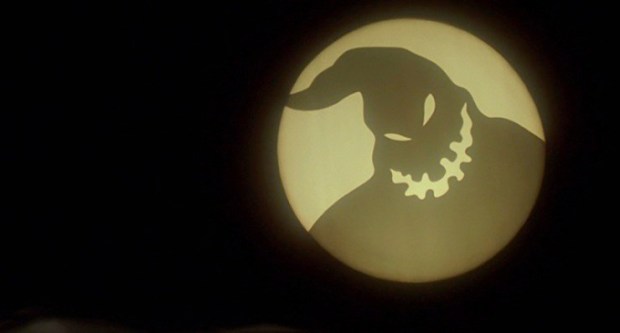
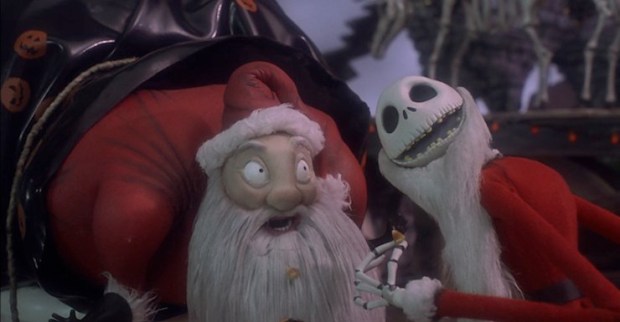
Is The Nightmare Before Christmas a Halloween Movie, or a Christmas Movie?

This fun, well-thought-out article by Max Gladstone finally settles the debate that my household engages in every year…or does it? I’m firmly in the Halloween movie camp–I mean, really, it’s about Jack losing passion for his role as the Pumpkin King, trying to be something he’s not, and subsequently finding himself–and his love for Halloween–all over again. But my husband is firmly in the Christmas move camp for reasons of his own. Whichever camp you’re in, this is a brilliant article on the topic and well worth reading. Who would have thought a claymation movie would inspire such deep, philosophical debate? Well, it is a Tim Burton creation after all, and not exactly your typical kid’s film. If by some chance you have missed this movie in the last 25 years, go rent it. Right now! Then come back to this article and see what you think. Halloween movie or Christmas movie? Maybe it’s both…


Is The Nightmare Before Christmas a Halloween movie, or a Christmas movie? In terms of worldbuilding, it’s obviously both—it’s about a bunch of Halloween-town residents taking over Christmas from Santa Claus.

But worldbuilding elements don’t suffice as genre classifiers, or else black comedies wouldn’t exist. Creators deliberately apply worldbuilding elements from one genre to another for pure frission’s sake. Consider Kiss Kiss Bang Bang (speaking of Christmas movies), which takes a New York noir character, a down-on-his-luck con, and drops him into an LA noir scenario of movie glitz and private eyes; or Rian Johnson’s amazing Brick, a noir story engine driving high school characters. Fantasy literature is rife with this sort of behavior—consider Steven Brust’s use of crime drama story in the Vlad Taltos books, or for that matter the tug of war between detective fiction and fantasy that propels considerable swaths of urban fantasy. If we classify stories solely by the worldbuilding elements they contain, we’re engaging in the same fallacy as the Certain Kind of Book Review that blithely dismisses all science fiction as “those books with rockets.”

And what happens after the slippery slope? The No True Scotsman Argument?!

This is a frivolous question, sure, like some of the best. But even frivolous questions have a serious edge: holidays are ritual times, and stories are our oldest rituals. The stories we tell around a holiday name that holiday: I’ve failed at every Christmas on which I don’t watch the Charlie Brown Christmas Special. When December rolls around, even unchurched folk can get their teeth out for a Lessons & Carols service.

So let’s abandon trappings and turn to deep structures of story. Does The Nightmare Before Christmas work as Christmas movies do? Does it work as Halloween movies do? It can achieve both ends, clearly—much as a comedy can be romantic, or a thriller funny. But to resolve our dilemma we must first identify these deep structures.

Halloween Movies

Halloween movies are difficult to classify, because two types of movie demand inclusion: movies specifically featuring the holiday, like Hocus Pocus or even E.T., and horror movies, like Cabin in the WoodsThe Craft, or The Devil’s Advocate. Yet some horror movies feel definitely wrong for Halloween—Alien, for example. Where do we draw the line?

I suggest that movies centering on Halloween tend to be stories about the experimentation with, and confirmation of, identities. Consider, for example, It’s the Great Pumpkin, Charlie Brown, which might at first glance be mistaken for a simple slice of life featuring the Peanuts characters’ adventures on Halloween. In fact, the story hinges on the extent to which the various Peanuts’ identities shine through the roles they assume. Charlie Brown is the Charlie Browniest ghost in history; a dust cloud surrounds Pig Pen’s spirit. Snoopy operates, as always, in a liminal space between fantasy and reality—he becomes the most Snoopy-like of WWI fighter aces. Linus, whose idealism and hope are the salvation centerpiece of A Charlie Brown Christmas, isn’t equipped for the kind of identity play the other characters attempt. He’s too sincere for masks, and as a result becomes the engine of conflict in the story. For Linus, every holiday must be a grand statement of ideals and hope. In a way, Linus is rewarded—he meets the Avatar of Halloween in Snoopy’s form, but fails to appreciate the message sent, which is that Halloween is an opportunity for play, for self-abandonment. It’s Lucy who turns out to be the truest embodiment of the holiday—by explicitly donning her witch mask, she’s able to remove it, and bring her brother home.

Even movies that feature Halloween in passing use it to highlight or subvert their characters’ identities by exploiting the double nature of the Halloween costume: it conceals the wearer’s identity and reveals her character at once. In E.T.’s brief Halloween sequence, for example, while Elliott’s costume is bare-bones, Michael, Mary, and E.T. himself all shine through their costume selections, literally in the case of E.T. The Karate Kid’s Halloween sequence highlights Danny’s introversion (he’s literally surrounded by a shower curtain!) and the Cobra Kai’s inhumanity (skeletons with all their faces painted identically!). Even holiday movies like Hocus Pocus that aren’t principally concerned with costuming present Halloween as a special night for which identities grow flexible: the dead can be living, the living dead, and a cat can be a three-hundred-year-old man.

If we expand our focus to include books that focus or foreground Halloween, we find Zelazny’s A Night in the Lonesome October, Raskin’s The Westing Game, and Bradbury’s Something Wicked This Way Comes, all of which focus on the experimentation with, or explicit concealment of, identities, and the power of revelation. Fan artists get in on the fun too—every time Halloween rolls around, I look forward to sequences like this, of characters from one medium dressed up as characters from another.

The centrality of identity play to the holiday explains why some horror movies feel “Halloween-y” while others don’t. Alien, for example, is a terrifying movie, one of my favorites, but with one notable exception it doesn’t care about masquerades. Cabin in the Woods, on the other hand, feels very Halloween, though it’s less scary than Alien—due, I think, to its focus on central characters’ performance of, or deviation from, the identities they’ve been assigned.

Examined in this light, The Nightmare Before Christmas is absolutely a Halloween movie. The entire film’s concerned with the construction and interrogation of identity, from the opening number in which each citizen of Halloween Town assumes center stage and assumes an identity (“I am the shadow on the moon at night!”), to Jack’s final reclamation of himself—“I am the Pumpkin King!”

So, are we done?

Not hardly.

Continue reading this article: https://www.tor.com/2018/10/26/is-the-nightmare-before-christmas-a-halloween-movie-or-a-christmas-movie/

Christmas Movies