Today is Tell a Story Day!

Though it would seem this day was made just for writers, you don’t have to be an author to tell a good story. The idea behind this day is to get people to tell, and listen to, each others stories, fiction or non-fiction, history or mythology. Everyone’s stories are unique. What are yours to tell?

In honor of the day, and just for fun, I’m sharing an old tale from my book world’s history. It is one that might have been re-told around the fire in Morganne and Elowyn’s generation, while the listeners wondered if it was real, or merely legend…or maybe a mixture of both. Enjoy!


snowy pathDelevan’s cheeks stung as he lifted his face to the first icy pinpricks of snow.  The harsh mountain wind forced its way down the hood of his cloak, making his lungs gasp with shock and his whole body shiver.  Its bitter edge had caught him by surprise.  He quickly looked down again, pulled his cloak more tightly around him, and quickened his step.  He knew he must get to the monastery before nightfall or suffer a freezing night out in this wilderness.

As he climbed, higher and higher along the twisting road, Delevan tried to warm his heart with thoughts of home.  Closing his eyes for one blissful moment, his vision danced with the sway of lush meadows and farmers’ fields bursting with ripened grain.  Harvest time was almost here.  The familiar sights and sounds of his home village brought a smile to his lips that faded all too quickly.  Despite his efforts to push them away, other thoughts surfaced with them, darkening his pleasant memory.  The rasp of bat-like wings in the dark…sudden bursts of flame…a barbed serpent’s tail crushing thick stone walls to rubble and dust.  The wyverns had come, from where no one could say.  All Delevan knew was that those beautiful fields of grain had been consumed by fire, and it was too late in the season to replant them.  His idyllic home, nestled into the green valley below the mountains, would never be the same.

That was how he had come to find himself heading alone into the cold northern mountains, whose white peaks had previously been nothing but a distant wonder.  Beneath his cloak, Delevan clutched a satchel protectively against his pounding chest.  Through its slightly opened neck he could smell the strong musk of ancient leather and parchment…a continuous reminder of his mission, and his duty.  The monks of his village had entrusted him with the only thing of value they had salvaged from the wreckage of the wyvern attack—an old tome of wisdom, scribed hundreds of years ago and carefully passed down through many generations.  It was one of humanity’s irreplaceable treasures, and he had been charged to deliver it to the monastery in the mountains for safekeeping.

The snow was falling more heavily now, sticking to his cloak and eyelashes, and draping the limbs of the trees with a web of intricate lace.  He struggled to keep up his quick pace on the slick road, but his resolve was still strong.  Out of the corner of his eye, he thought he detected a shadowy movement in the thick of the trees.  He peered anxiously into their depths.  Nothing was there.  He tried to calm himself, but remained alert, glancing about as he walked.  Something didn’t feel quite right.  The monks had warned him that the frigid temperatures and the hazardous terrain were not the only dangers he might face.  He had not given their warning much thought at the time, but now wished he had paid better attention.  Again, he sensed a quick, stealthy movement, above his head this time.  He drew his gaze upward into the sky.  Were the wyverns stalking him? They usually cloaked themselves in the dark of night, spreading unimaginable fear and chaos.  If not the wyverns, what was following him?  His stomach sickened and his mouth went dry.  Perhaps making this journey was a mistake.  Was he really risking his life over a book?

The sense that he was being followed increased with each step.  Delevan was convinced that he saw shadows between the trees and passing overhead, but each time he turned to get a true look, he saw nothing but the blinding whiteness of the snow.  Cold though he was, his brow began to drip with sweat and he had to restrain himself from breaking into a run.  One bad slip could easily send him down the side of the mountain to his death.  A low hissing sound brushed past his ear, sending a chill through his soul that was colder than any mountain wind.  He had not imagined it.  The dark shadows taunting him did indeed belong to something real, and that something was pursuing him.  Oh please, Aviad, he prayed silently. If you can hear me at all, protect me from this fear that would devour me.  He wasn’t certain if his plea had been heard, but he continued onward with trembling legs.

The wind turned colder than Delevan had ever imagined was possible, penetrating even his fur lined cloak, and driving the snow into his numb face without mercy.  He wanted so much to stop and rest, but dared not.  He nibbled on some hard cheese and drank from his waterskin while he walked.  Though his physical trials had not relented, at least for the moment there were no more shadows.   Delevan began to think again of home.  He had never been so far away before.  His neighbors would all be working hard to clear away the rubble, rebuilding their world stone by stone.  Should he not be there helping them?  Guilt weighed heavy on his heart. For the first time he stopped, turning to look down the road from where he had come.  His desire for home grew so strong that he could hardly bear it.  There were a hundred reasons why he should return, and so few to compel him forward.  His longing was almost a tangible presence in his mind, urging him, pressing him…assuring him that no one would think less of him for abandoning such a treacherous journey.  But deep down, he knew that voice was false, and that he should fight against it.  The shadows had returned, this time lurking not amongst the trees, but in the dark places of his mind.

Perhaps this quest was not simply about saving a single book.  Protecting the tomes of wisdom was one way in which men sought to preserve their past and secure their future.  Delevan’s village was not the only one to face calamity in recent years.  Other parts of the realm had been decimated by wars, famine, and disease.  Shrines and monasteries were being razed by dark armies of terrifying creatures, their master a being of such evil no one dared to speak his name.  His purpose was the complete destruction of humanity, body and spirit, and he pursued the tomes so that he might extinguish the light of hope they brought to men’s hearts.  That was the enemy who pursued Delevan now, he was sure of it.  His heart fell.  He turned his face to the heavens in his despair.  What chance have I against such a powerful foe? Words of comfort filled his mind, but there were words of warning as well.  His trials were not at an end, and he must brace himself against them.

Swallowing hard, Delevan began walking again, but not toward home.  The skies suddenly opened up as if to tell him that he had made the wrong choice.  The snowfall was so heavy he could barely see where he was going.  Layer upon layer, the road and mountainsides were being covered by a thick wet blanket that clung to his boots, weighing them down.  Delevan gritted his teeth and pushed onward, testing the strength of his will.  He closed his eyes and imagined it was spring.  There was no time for rest, no room for complaint, though every muscle ached and his hands were sore with opened blisters.  The warmth of the sun would not wait to do its work, and the seeds must be planted.  Delevan’s hands were on the plow, his back bent against the hard brown earth that must be broken up for planting.   The snow was no match against that.

For hours he continued along a seemingly endless path of white, twisting upward into the sky.  Delevan’s stride weakened and he began to wonder how much farther he could push himself.  Yet he knew he must, or he would surely die in this blinding storm.  More than once his footing stumbled on hidden stones and branches, or slid on patches of ice.  Not a single soul passed him on the road, nor had he seen any homes, or distant plumes of smoke to offer him hope.  If he collapsed into a snow bank, who would ever find him?  The monks had told him that the road ended at the monastery, but they had not told him how long the road would be.  Perhaps the shadows had stopped pursuing him because they knew he would never make it.

Delevan’s limbs were dangerously cold.  He could barely feel his fingers, even though he wore thick, protective gloves.  His toes burned, and a fearful expression was frozen onto his raw, sore face.  His legs only continued to move because he forced them to.  Worst of all, daylight was beginning to wane.  Delevan had ceased to care about his oath or the tome.  Had he means to make a fire, he would have gladly burned its pages just to warm himself for but a few moments.  His remaining determination was focused on survival alone—the shadow pursuing him now was death.

He began to wonder what it felt like to freeze to death…would it be more painful than his present torture?  Or would it be like slowly falling into a cold, dreamless sleep?  He was close to giving into his despondency when he thought he saw firelight ahead.  He stumbled forward, nearly falling face first into the snow in his haste.  At last, there was a small village.  Tears swelled in his eyes as he took in the tiny cluster of humble homes, and the delicious scent of burning hearth fires hanging on the air.  He ran up to the first house and knocked heartily on the door.  No one answered.  Desperate, he knocked again, harder this time.  Still nothing.  He went to the next house, and the next with the same result.  Finally he approached the last house, his only hope for shelter from the elements.  He knocked, his heart fairly breaking when the door remained closed.  What sort of strange place was this?  Where was everyone?

He pounded hard on the door in a moment of frustration.  The door, apparently not securely latched, opened on its own.  Delevan called out one last time before peering inside.  There he saw everything he had been dreaming of.  A thick fur rug was spread before the hearth, which boasted a roaring fire that popped and hissed invitingly.  Off to the side was a table heaped with breads, cheeses, meat pies, and dried fruits.  He began to peel off his wet things in front of the fire, then fell upon the food as a wild beast might, devouring handfuls of it so rapidly he barely had time to taste it.  He hoped whoever lived here would forgive his desperation.  When his stomach was full, he spread out on the soft rug and let the fire’s heat soothe his tired body.  His eyelids were heavy with sleep.  He would reach the monks tomorrow—surely they would understand the delay.  But Delevan’s mind would not let him rest.  Deep within his heart, he knew something was terribly wrong.  The monks had not said anything about a village along the way, let alone an empty one with a ready fire and fresh food just sitting out for the taking.  But the thought of putting back on his wet cloak and boots…going back out into the driving snow with evening soon descending…left him feeling completely defeated.  He had finally reached the end of his will and his strength.  Please, Aviad, help me one last time, for I cannot finish this quest on my own.

Delevan began to hear voices, muffled and distant.  Finally there was someone who might be able to help.  He strained his ears, and gradually the voices came into focus.

“I saw him coming up the road when I went up into the bell tower to call for evening prayer.  Just before he reached the gates he stopped, fell to his knees in the snow, and didn’t move…just stared.”

“Will he be all right?” another voice asked with genuine concern.

“His body is still warm enough—I’ve seen worse.  Take off his wet things, and get him a blanket.”

“He carries one of the tomes with him,” exclaimed yet another.  “I suspect that the worst of his hardships had little to do with the weather.”

Suddenly the illusion clouding Delevan’s vision peeled away, and he realized that he was sitting before a warm fire, not in an empty house, but at the monastery surrounded by three kindly looking monks.  He had reached his destination after all.  The shadows had preyed on his desires, leaving him to freeze to death on the very threshold of the monastery.  Through chattering teeth, he thanked the monks for saving his life and handed over the tome, relieved to be rid of it.

“Such a dangerous journey to make alone.  Did you not bring any companions?” one monk asked.

“I had no companions,” he replied thoughtfully. “But even through the darkest moments of my journey, I was never really alone.”

How Video Games Can Transform Your Writing (Guest post by Author Allison D. Reid)…

No, I haven’t lost my mind, and I’m not a video game addict either—I am totally serious. I’ve been passionate about writing my whole life; participated in writing groups, gone to conferences, taken more classes on writing than I can remember, and even majored in writing in college. But it was through a video game that I learned to really be a story teller and develop characters that breathed a life of their own.

Find a game where you can roleplay with others.

I’m not talking about your standard shoot-em-up, follow the canned story line from point A to point Z until you defeat the big boss kind of game though. I’m talking about the open-ended kind. The games that give you an interactive world full of other players, and opportunities to challenge yourself by building skills and going on quests, either of the game’s making or your own. The games where you can engage with other storytellers and actually roleplay. As writers, we sometimes enjoy good reviews or fan mail, but we don’t typically get to experience the immediate reactions of those reading our stories. Getting to not only experience those reactions, but have readers respond back in a way that influences what you write next, teaches you a lot about what it takes to make an engaging character or story.

Build your own narrative within the game, and connect your stories.

My own book series has its distant origins in one such game, called Ultima Online. As far as I know, its servers are still running, though I no longer play. What started out as something entertaining to do in the evenings after work, became an incredible creative outlet. It resulted in a massive collection of interconnected stories and vignettes that I and a small group of other players built upon for years. The interplay between world, history, and character became a wellspring for the imagination—a boundless source of ideas just waiting to be explored. Even though the game world had its own official history and storyline, following it wasn’t necessary. We made up our own history for that world, our own mythology, and tied it into our individual storylines. Everything we did in game continued to feed into the larger story, so it just kept growing.

Become your character(s) when you’re in game, flaws and all.

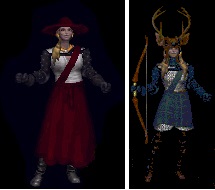
Morganne and Elowyn

The Original Morganne and Elowyn, circa 1998.

Roleplaying taught me more about character development than all of my previous writing coursework combined. Why? My characters were no longer theoretical. There was no omniscient narrator between me and their deepest inner thoughts and feelings. With no set plotline to consider, and no need to balance out the actions and thoughts of other characters at the same time, all I needed to focus on was being my chosen character at that moment in time. When I stepped into the role of Morganne, for instance, I really pulled on her boots and peered out at the world through her eyes rather than my own. I spoke, thought, felt, and reasoned like she did.

Unlike in a story or novel where I maintained control over what would happen next, I never knew what Morganne might encounter from day to day. Different situations would arise based on the actions of other players, and I would have to react, not as myself, but as Morganne. And I didn’t have days or weeks to mull the implications of those reactions, either. I had to quickly base them on what I knew of her as a person and stay true to her integrity as a character. Whatever I did, whatever I said, could not be taken back or re-written later.

With real-time roleplaying there could always be unanticipated consequences, of course. After all, I was dealing with the varied personalities of other players’ characters and their background stories. I might make new friends who would come to my defense in times of need. Or I might make new enemies, who would from then on make a point of coming after me. But every decision, every interaction became a part of who Morganne was, and got woven into her larger narrative, until thread by thread, a rich and complex character came into being.

Take the characters you love beyond the game.

The game gradually changed; friends came and went, and my own life circumstances left me little time to play. The day I shut down my account, it literally felt like a part of me had died. It’s a strange thing to grieve over people that aren’t real, yet they had become real to me. What would become of those characters I had invested so many years, and so much of my inner self, into developing? Instead of shelving all of those old stories, and resigning my beloved characters to oblivion, I preserved them in the form of my first novel, and then my second, with still more to come. Not just my characters either, but the memories of so many others that I had met and been influenced by along the way. Fifteen years later I’m still drawing from that infinite wellspring I discovered in, yes, a video game. I’ll probably still be drawing from it fifteen years from now, because I truly love my characters and the new world and storylines I’ve made for them.

Other ways video games can help your writing.

I still play other video games on occasion, though I’m careful not to let them suck too much of my writing time away. Here are some other simple ways they can help.

  • If you’re in a game where roleplaying is possible, this can be a great time to experiment with unusual characters or story lines—particularly those that take you out of your comfort zone. Try them in the game before making them part of your current work in progress. Let the other people you play with serve as a sounding board to bounce ideas off of. See how they react to your experimental character/storyline, and ask for feedback that will help you decide if it works or not.
  • World building can be challenging. If you’re having trouble visualizing your own world, how can you make it a real place for your readers? Maybe you are trying to figure out a castle’s layout, how a certain village would look, or describe some other important location in your book. Build it in Minecraft. It’s not a roleplaying game, but in it you can build just about anything you can imagine, block by block. I’ve terraformed landscapes, made castles, medieval villages, seaside mansions, and all sorts of other things. Sometimes through the building process you realize that the vision in your head isn’t actually possible or practical, or takes up way more, or way less space than you thought.
  • Sometimes when I’m struggling with ideas or something I’m working on isn’t quite right, video games provide a much needed mental break. Ideas can still be percolating in the back of my mind while I get myself refocused, or re-energized.

So the next time you’re looking for a video game diversion, don’t feel guilty about it—make it count. Pick a game that can actually help you hone your writing skills while you play. You might get more out of it than you ever thought possible.


Thanks to Chris Graham for posting my article on The Story Reading Ape blog!

Chris The Story Reading Ape's avatarChris The Story Reading Ape's Blog

No, I haven’t lost my mind, and I’m not a video game addict either—I am totally serious. I’ve been passionate about writing my whole life; participated in writing groups, gone to conferences, taken more classes on writing than I can remember, and even majored in writing in college. But it was through a video game that I learned to really be a story teller and develop characters that breathed a life of their own.

Find a game where you can roleplay with others.

I’m not talking about your standard shoot-em-up, follow the canned story line from point A to point Z until you defeat the big boss kind of game though. I’m talking about the open-ended kind. The games that give you an interactive world full of other players, and opportunities to challenge yourself by building skills and going on quests, either of the game’s making or your own. The…

View original post 1,405 more words

Being an Author: Hobby, Career, or Calling

Very interesting article, re-posted from the blog of author David G. Johnson. Which type of author are you?  I found my category here and for the most part it was dead-on.


One thing I have realized running an author’s group on Facebook is that authors come in all shapes and sizes, ages and experience levels, with motivations that run the full gamut of possibilities. While generalizations are “generally” bait for arguments, I think I am on fairly safe ground in saying the overwhelming majority of authors I have met through various groups and conferences fall into one of three motivational categories. Sometimes writers get into periods of severe frustration or depression because other authors they know are living out very different experiences. What they don’t realize is, those other authors may be in a completely different class.

I am not talking about levels of talent, ability, or imagination. I am not even talking about the vast differences between the characteristics of authors in different genres. I am talking here about their category of motivation. Understanding why one writes is easily as important to longevity, joy in writing, and long-term mental stability as any other factor about who we are and what we do.

This article is going to briefly examine the key motivational aspects of the three major categories of writers, in an attempt to help writers find where they are and find peace in the aspects of being in that category. It will hopefully help writers recognize why their experiences may not be the same as other authors they know, and how to tailor their writing experience to find the joy in being where you are with your writing.

Category One: The Hobbyist

Often degraded or ridiculed by the hardcore career writer, the hobbyist can find themselves dejected when they see the aggressive word count goals or publishing productivity of other writers. Many hobbyists unrealistically attempt to set goals based on what they see career writers or even called writers doing. When they fail to meet those goals, they can even question if they are truly a writer or just someone playing dress-up.

Strengths: A hobbyist generally has a keen imagination. They love stories, and are often the most avid readers among the writing community. They can build up other writers, because many hobbyists love blogging or social media, where they can satisfy their desire to write in smaller, manageable snippets. Hobbyists are generally bottomless fountains of ideas, and are exactly the kind of people other writers want involved in brainstorming sessions. They tend to have a natural exuberance and contagious joy that can be key fuel to those they interact with. Their contribution to the writing community is the joy and excitement reminding all of us how amazing writing can be.

Weaknesses/Caution Areas: Hobbyists generally have a full time job or other life commitments that greatly limit the time they can spend writing. Full-length novels can sometimes take years to complete, especially considering the distractions of new ideas constantly popping out of their imaginations. Focus and routine can be challenging for hobbyists, and if they try to constantly compare themselves or set their schedules according to career or called writers, they are setting themselves up for disappointment.

Advice: Enjoy who you are. There is nothing wrong with setting goals, if you feel that will help you, but set realistic goals based on your own knowledge of your time, how quickly you write, and what other obligations you have. There is nothing that will kill your joy of writing quicker than seeing an ever-growing deficit of word count goals. You are not going to turn out four books a year. You are not going to build the series momentum sales of more prolific writers. The key is to remember why you write. You love stories, reading them and telling them. If you want to build readership, focus on more sustainable goals. There are flash fiction and short story markets that might be exactly your niche. You may not turn out four novels a year, but you very well might be able to churn out four short stories per year, and the paying markets for shorter works can be lucrative, while simultaneously building readership for your longer works. Walk your own road, and enjoy the journey. Don’t be someone else, be yourself.

Category Two: Career Writer

This one is almost self-explanatory. This category covers everyone from professional journalists to self-help gurus, to fiction masters like Stephen King, Dean Koontz, Robert Ludlum, J.K. Rowling, and George R. R. Martin. These people write for a living, and they treat their work like a job. Many have scheduled “butt-in-chair” time every day, with aggressive goals for turning out the next best-seller. They are the ones in line for the Pulitzers, the Hugo and Nebula awards, and frequently feature on the NYT bestseller list.

Strengths: These can solid writers or critically lambasted hacks, but they have one thing in common, they sell! Common readers seldom care about literary genius or flawless diction. They want a good story, and whether it is newspapers, magazines, or novels, these folks deliver. They are the darlings of the big-house publishers and the mainstream media because their stories have unmatched mass appeal. They generally have the discipline to meet deadlines and are reliable as clockwork in promoting their works and generating sales. At one time they were the knights in shining armor of the writing world, but with the recent wave of independent publishing opportunities, the ramparts they once stood upon have largely crumbled. They still have their place in the world, but it is a world much more crowded than it once was. Their place in the writing community is as examples, models, and beacons of hope for what could be.

Weaknesses/Caution Areas: Pride and arrogance are always a danger to these writers. They are no longer kings of the hill, and some have chosen public condescension and polemics as the response to the wave of increasing popularity and viability of indie published authors. While many have seen the writing on the wall and adapted to the changes in the publishing world, others staunchly refuse to adapt and run the risks of falling under the waves of the changing tide.

Advice: Recognize a critical fact as you assess your place in the changing world of publishing. A rising tide lifts all boats. Indie publishing has resulted in a huge increase in readers overall. Ebooks have made commutes, travel time, and layovers a venue to get what we write into the hands of more readers. Find ways to tap into the wave of popularity of indie authors and social media. Cooperation trumps competition. When one cannot stem the tide, survivors learn to go with the flow.

Category Three: The Called

Usually calling is associated with religious service or vocation. That can be the case with writers, and often is for many Christian authors. For a writer, however, being among the called is about motivation. Why do you write? The simple answer for those who fall into the category of the called is simply, “I can’t not write.” Author R. A. Salvatore is quoted as saying, “If you can quit, then quit. If you can’t quit, you are a writer.” While I am not sure this quote equally applies to all writers, if we are talking about the motivation for writing, it certainly applies to the called. This category includes many of the masters, whether prolific or those who only ever wrote a single book. It is their craft and their mission to complete the project buried in their heart. Whether a single great-American-novel or a series of epic stories that change a generation, called writers like heroes on an epic quest, and only the achievement of their goal will quench the fire that drives them on.

Strengths: Called writers are driven to recognize writing is part of their DNA. Doubts about whether or not they are “real writers” rarely figure into the picture. Low sales numbers don’t discourage them. Word count goals can be useful tools, but are not intrinsic to their feeling of success. Their value comes when they turn out that perfect story. Some spend everything to craft that perfect creation. Others, once done, begin the next quest for the next adventure in a line of adventures. Called writers are often the hardest to discourage, because they draw their encouragement from something within rather than anything outside themselves. Their place in the writing community are like the prophets of old. They can make us believe!

Weaknesses/Caution Areas: Called can sometimes be almost as elitist as some career writers have been known to be. The eccentric nature of their driving force can often cause called writers to be standoffish or disconnected from the writing community. There is a tendency to scorn those who can’t see the “vision”. Some called writers might become so reclusive and detached that by the time their masterpiece is completed, they have lost touch with all channels to bring it to light.

Advice: By all means nurture and maintain that special drive within you, but recognize others, while different, also have value. There is no single “right way” to be a writer. You have the ability to be a visionary and inspiration to other writers, and you may find other authors can rally behind you and support your vision like few readers can. Use the gifts you have been given to build up the writing community. Continue to inspire those around you, and continue to turn out the masterpiece(s) that drive you. Often called writers represent the apex of the craft and can inspire future generations of writers with their stories.

I hope this article has been helpful to those of you who find yourself, for whatever motivation, in the classification of writer. Maybe you find yourself squarely in one of these categories. Perhaps you find yourself with a foot in two of these camps, and maybe a hand in the third. Whatever your motivation, spend some time in quiet self-reflection and seek to understand why it is you do what you do. Recognize that every motivation and category has strengths and weaknesses. Learn them both, and then learn to take joy in who you are as a writer. Don’t let the success or failure of others in their goals have any effect on you. Find yourself, then be yourself. Doing this, you will find writing one of the greatest joys in life.

David G. Johnson
Bestselling Author of the Chadash Chronicles
http://tinyurl.com/DavidGJohnson

Listen to an interview with David G. Johnson on By the Fireplace

How to Attract Readers – by Renee Scattergood

This is the hardest part about being a new author. You know you have a great story to share, but how do you convince others you have a great story?

Well, here’s the thing. You don’t.

The more you try to push your story on others, the more you get labelled an annoying salesman and drive potential readers away.

So what’s the solution?

It’s simple. You sell yourself instead of your books. Do this by using social media for its intended purpose: to meet and interact with people. Get to know other authors, especially authors in your genre, and people who enjoy reading in your genre. Engage them in conversation and visit their blogs (if they have one) and leave comments. Share their posts (and let them know you’ve shared). Re-blog their posts if their blog allows it.

By doing this, you’ll be helping them, and believe me… they’ll appreciate it. When you help people this way, they will often check out your stuff as well. If you have your website/blog set up to feature your work and get sign-ups for your newsletter, and you make it easy to share your content (with one click share buttons), they will likely share it.

Don’t stop there though. When you’ve made connections with people, offer to host them on your blog. You can interview them or maybe even offer to review their work (if you enjoy writing reviews). You can even ask them if they’d like to write a guest post for your blog. They might appreciate the exposure so much, they’ll offer the same in return. Of course, you can always ask for reciprocation.

Follow the 80/20 rule where 80% of your content should be entertaining and/or informative and 20% promotional. You can draw attention to your blog by writing informational posts on writing, publishing, marketing or your genre. Or you can write something entertaining like poems, short stories or even share a personal story. People will love to hear about your personal experiences while writing.

Bottom line is, don’t get caught up in the promotion. Most people, unless they know you, won’t be interested in your new book. So you have to let them get to know you first. Once you’ve taken the time to connect with potential readers, your work will likely sell itself.


Biography:

Renee Scattergood PicRenee Scattergood lives in Australia with her husband, Nathan, and daughter, Taiya. She has always been a fan of fantasy and was inspired to become a story-teller by George Lucas, but didn’t start considering writing down her stories until she reached her late twenties. Now she enjoys writing dark fantasy. She is currently publishing her monthly Shadow Stalker serial, and she has published a prequel novella to the series called, Demon Hunt. She is also working on a new series of novels, Savior of the Serpent Isles. The first book, The Galvadi Invasion, is due to be released mid-2016. Aside from writing, she loves reading (Fantasy, of course), watching movies with her family, and doing crafts and science experiments with her homeschooled daughter. Visit her site for more information and a free copy of Shadow Stalker Part 1 (Episodes 1 – 6): http://reneescattergood.com

Author Pages:

Website/Blog: http://reneescattergood.com/

Renee’s Author Spotlight: http://reneesauthorspotlight.blogspot.com.au/ – a blog where I feature indie and small press authors.

Amazon Author Page: http://www.amazon.com/-/e/B00NTJY1W2

Smashwords Author Page: https://www.smashwords.com/profile/view/rscatts

Read As I Write (Don’t wait til the book is released): https://www.patreon.com/RScatts

Social Media:

Facebook Page: https://www.facebook.com/reneescatts

Twitter: https://twitter.com/ReneeScatts

Google+: https://plus.google.com/u/0/100671337443224225702/posts

LinkedIn: https://au.linkedin.com/pub/renee-scattergood/56/963/3

Pinterest: https://www.pinterest.com/rscatts/

Featured Author: Louise Findlay

Louise Findlay - Dreamless RoadsA fantasy writer who creates short tales about many supernatural creatures and the adventures they embark upon.
Louise Findlay writes fantasy (generally short stories) and inspirational poetry. She enjoys reading and writing about mythological creatures such as angels and demons but has a soft spot for vampires. Louise is currently in the midst of writing a vampire novella about two vampire clans whose deputy’s clash in a big way, entitled A Spy in the Sagax Vampires. She generally writes ebooks but she’s a part of a few anthologies which are in print and she is working on a special secret project this year.

Patreon Link: patreon.com/authorlouise

https://www.youtube.com/watch?v=NBdbhkSxLcc


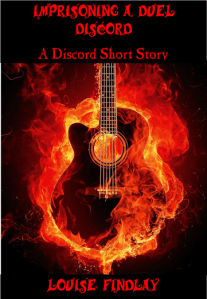
Imprisoning a Duel Discord Description

The world is in musical order and a team of Government Agents called Harmony track down, experiment on, and sometimes kill those who express the music of dissonance. Psycha, a duel Discord of Vyla and Sios, is a prime lab rat to Harmony. Being able to disrupt harmony just by voice and hands alone makes her even more dangerous than the usual Discord. Will she run into trouble trying to protect her boyfriend, Caleb? Will her desire to destroy Harmony prove fatal for her? What will be left of her if she ever does get captured?

Imprisoning a Duel Discord Cover 2Imprisoning a Duel Discord Excerpt

Psycha

What had Caleb gotten himself into this time? We were discords for music’s sake. We couldn’t strike back against Harmony if we ran, and be damned if he got caught. He was a Tara Discord not a Vyla like me. He was more vulnerable and I knew for a fact he left his Tara back at camp. Careless. That was so unlike him. He was usually methodical and paranoid. He couldn’t afford to throw his life away on a whim. I was the reckless one.

I hummed a tune to try and find his wavelength. Discords stuck out like a sore thumb, and he was a Tara. He was invisible without it, but I knew his musical signature like the back of my hand. I was almost certain I could pick something up, and I did. The three note discordant hum that was uniquely Caleb was faintly ringing in the air. I rushed to try and catch up to him. There was no way he would get captured on my watch. Cinder would kill me.

No. I caught sight of a man with the Harmony symbol on the back of his black suit. The tell-tale sign of a sharp, with two notes at the bottom and a treble clef in the middle, made him the enemy. I’d seen what happened to Discords when Harmony got a hold of them. They were mere husks of their former selves; dead and despondent inside. Their life cruelly ripped away. I would not let that happen to Caleb.

I screamed out notes at the man’s back, notes which clashed horribly. It was music to me, but the assailant recoiled, clutching his head in pain. How dare he try and take away the thing that made Caleb who he was. Being Discords defined us.

My enemy retaliated by taking out his Ko and trying to play me into submission. The harmony was excruciating to me. I was a duel Vyla/Sios Discord. Normal Discords were three parts discord and one-part harmony. I was fully Discord. I could control music with my voice and by touch alone. I hated Harmony for what they did to us, and I knew I’d be their prime lab rat.

“Caleb, run” I shouted.

I was bombarding him with musical assaults, but I had to be careful not to hit Caleb. He was powerless without his Tara. Why did he not bring it with him?

“I’m not leaving you,” he said.

Ah. Blood ran down my cheek when a note hit. Harmony and dissonance were opposites. One could hurt the other. Harmony were the government and Dissonance were the outcasts. I would make them pay for condemning us to a lifetime of running. Harmony agents lived to capture us.

“Go, you idiot. Get back to camp. You’re defenseless,” I ordered.

At last, he managed to see sense and fled. I couldn’t protect him if he was in the way. I waved a shield to protect against the agent’s next attack. Now Caleb was safe I could really let loose without fear of hurting him. I used my voice and hands in tandem to unleash a barrage of musical weapons at him. Streams of note swords and arrows flew at the enemy. He was pretty quick to keep up with me, but he couldn’t deflect everything I threw at him.

I started to hum a dissonant melody designed to sweep into his soul. I would poison his harmony with dissonance. He let out a hiss, which told me I was successful. I screamed as more musical implements of doom attacked me. I used the blood trickling down my arm in a note. Blood notes packed a mean punch. Judging by the look on his face, it did. “Just die, Harmony bastard,” I said.

“Bring it, Discord cur,” he replied.

I screamed like a banshee. When he was distracted, I flung a spear at him. I turned his cries into a gag with a wave of my hand. His voice was grating to my ears. Ah. A melody hit me straight in the neck and continued to constrain my throat. I tried to catch my breath, but it was impossible. I flailed around, trying to swipe him off me, but to no avail. I couldn’t let him get me. I couldn’t be captured. I finally managed to get him to relent, but my vision turned hazy as I gasped for breath.