Medieval Hygiene Might Have Been Better Than You Think
by: Wu Mingren
The Medieval period is usually perceived as a time in Europe during which the greater part of the continent was in decline. In many aspects of Medieval society, the quality of life was inferior as compared to either the Roman period that preceded it, or the Renaissance that succeeded it. One such aspect is that of hygiene practices.
The Medieval Water Closet
The concept of hygiene habits during the Middle Ages may be said to be quite different from that which we understand today. This is reflected in the hygiene practices that the people of this age were performing in their everyday lives. For a start, indoor plumbing had not been invented yet, and people would normally use a privy (known also as an outhouse or a garderobe) when nature called. This crude toilet was often just a shack with a slab of wood over a hole in the ground. In castles, monasteries, and convents, these were narrow rooms for people to relieve themselves. In all fairness, these indoor privies were placed as far away as possible from the interior chambers, and usually had double doors to keep the unpleasant odours in.
- 2,000-Year-Old Feces from the Silk Road Reveal Spread of Infectious Diseases
- Demons in Your Toilet? Guardians of the Sewers and How They Protected Ancient Latrines
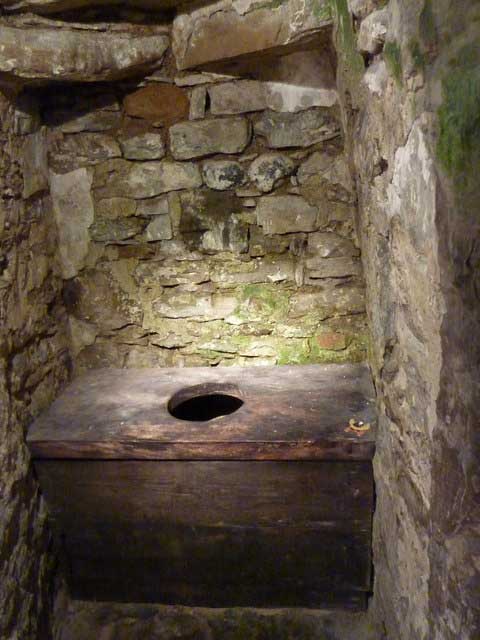
In addition to this, there were also chamber pots, which we kept under the bed, so that people could use them at night. One of the bizarre occupations that arose from this hygiene habit was that of the ‘Groom of the King’s Close Stool’. This job, held usually by the sons of nobility, involved assisting the king when he had to do his business, and cleaning up afterwards.
It goes without saying that the waste products had to go somewhere. In an age when sewers were non-existent, people simply made cesspits, which were essentially huge, deep holes dug in the ground, into which human waste was dumped. Ironically, perhaps, this practice was not hygienic, as the waste products exposed to the air created a suitable environment for the proliferation of bacteria that could spread diseases. As for the privies in castles, excrement would either fall into the moat, or released down the side of the castle’s walls. An interesting story about this medieval ‘sewage’ system comes from the 1203-1204 siege of Château Gaillard in Normandy, France. During the siege, the French forces succeeded in capturing the second wall by penetrating it via a unguarded toilet chute that led to a chapel.
Want to know more about hygiene in medieval times. Check out this prior Medieval Monday post for more fun facts and insights. Click here.
Use the Medieval Monday Index to discover other topics relating to daily life in the Middle Ages.
 Oxford University has become England’s academic pulsing heart, but it began as part of a friary established by Franciscan friars in 1224, known as Greyfriars. The massive archaeological dig is being directed by archaeologist, Ben Ford of the heritage consultancy,
  Allison D. Reid